PROGRAM
Final Program
The Organising Committee is pleased to announce the release of the AFHC 2026 Program.
Across five days, AFHC 2026 packs in a full program with something for everyone — city leaders, practitioners, and researchers working across public health, urban planning, transport, housing, environment, and policy: everything that creates a healthier city. It’s designed to inform, connect, and inspire.
The program is organised around five sub-themes:
-
-
-
Indigenous and traditional knowledge systems
-
Liveable density and urbanisation
-
Financing, governance and local leadership
-
Climate resilience and planetary health
-
Population change and health across the life course
-
-
A more detailed program is currently in development, as our exciting lineup of speakers continues to grow.
Here’s what to expect.
Pre-Conference
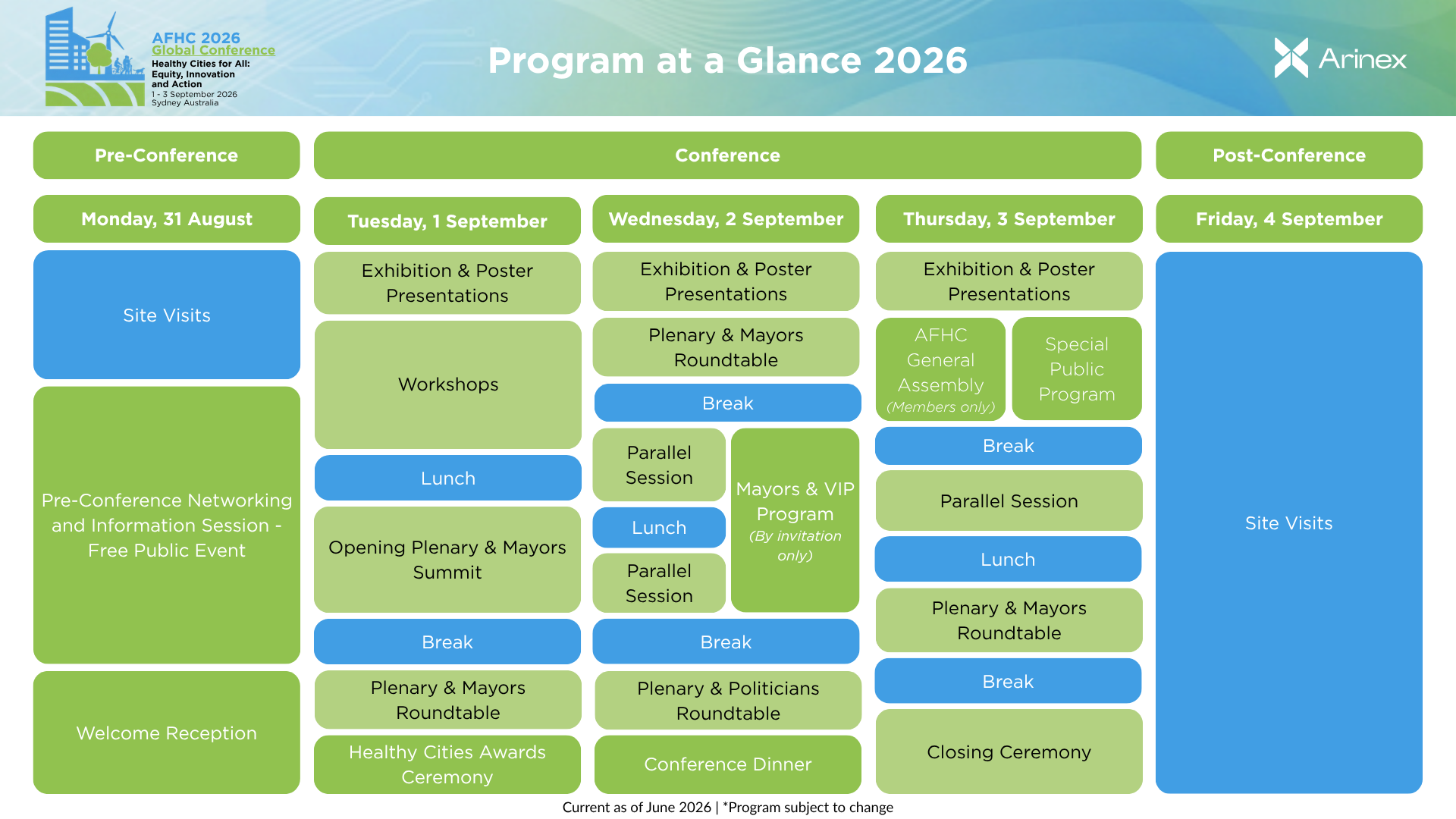
The Pre-Conference Networking and Information Session offers delegates the opportunity to connect with fellow delegates before the conference begins. Meet colleagues from across the Healthy Cities community, make new connections, and receive practical information to help you prepare for AFHC 2026. A great opportunity to start your conference experience before the opening sessions. Following the event, guests will be taken on a guided tour of the First Nations Health Exhibition. Free to attend, RSVP required.
Opening and closing ceremonies
The Opening Plenary and Mayors Summit sets the stage for the conference and features the Mayors Commitment, a collective pledge from city leaders to advance healthy, equitable cities. The Closing Ceremony marks the formal handover to the next host city and brings the program to a close.
Plenary sessions and roundtables
Plenary sessions and Mayors and Politicians Roundtables anchor the conference, bringing together cities from across the region and connecting the healthy cities movement with other city networks, with a speaker line-up of city mayors and diverse voices from across the region. These sessions set the direction for the field and put regional leadership on the main stage.
Oral and poster presentations
With 200 presentations from over 25 countries, the parallel program runs 6–8 sessions at a time, so you can follow the topics that matter most to your city. Expect research, practice, and policy case studies from universities, local governments, and community organisations across the region.
Interactive sessions and capacity-building workshops
20 hands-on workshops and interactive sessions, led by universities and partner institutions, give practitioners practical tools and skills to take home and apply. Sessions span the breadth of the movement — from placemaking and participatory urban design to reconnecting with Country through Indigenous and Western knowledge, urban nutrition, metrics for liveable places, wellbeing valuation, community leadership, and walking journalism — through formats built around exchange and participation, including walkshops, world cafés, and skills clinics.
Site visits
Get out of the venue and into the city. Curated visits showcase Sydney’s leading work in urban parks, green space, active transport, community health, and climate-health initiatives — with options on the pre- and post-conference days (Monday 31 August and Friday 4 September).
Awards ceremony
The Healthy Cities Awards Ceremony celebrates outstanding work from member cities. Enter to put your city’s achievements on an international stage.
Social program
Connect over the Welcome Reception at the UNSW Health Translation Hub and the Conference Dinner at the Museum of Contemporary Art, overlooking the Harbour Bridge and Opera House.
Plus: the AFHC General Assembly (members only), a special public program, a dedicated Mayors and VIP program (by invitation), and an exhibition hall.