SITE VISITS
AFHC 2026 Site Visits
Site Visit (1A)
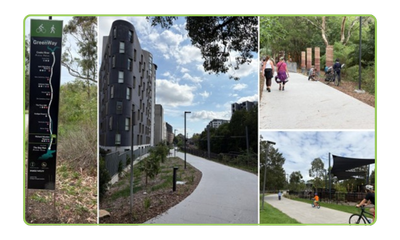
Exploring Sydney’s GreenWay: A health supportive environment with real-world lessons for global cities, human health and planetary sustainability
Date: Monday 31 August 2026
Time: 9:00am – 1:00pm
Location: The Greenway. View map
Meeting point: Leichhardt North Light Rail stop
Organiser: Professor Susan Thompson (School of Built Environment, UNSW)
Capacity: 20 pax
More Information
About the Walkshop:
Situated in a rapidly growing and densifying mixed residential area, the GreenWay is a 6.7 km multifunctional green corridor. It incorporates major stormwater and light rail infrastructure, a shared walking / cycling path, bush care sites, recreational facilities, heritage and Indigenous acknowledgement, and public art installations. The GreenWay started back in 1988 as a grassroots campaign led by local residents, environmental advocates and cycling groups. Over time, it secured multi-level government support and was delivered incrementally across political cycles. The final sections opened in late 2025, completing an $AU60 million multi-government project.
The walk will commence at Iron Cove and go the full length of the GreenWay to the Cooks River. Along the way we will see different features of the GreenWay and experience first-hand its evolution from local community advocacy to an important recreational, educational and commuter corridor offering health supportive activities for local residents and visitors. During the walk there will be opportunities to consider a range of issues which offer lessons for the development of greenways in other cities. This will include challenges of ongoing maintenance, community participation in environmental programs and opportunities for education.
What to bring and wear: Hat, sunscreen, rain jacket and water bottle; wear closed in comfortable walking shoes
Background reading: ‘Learning Along the GreenWay: An Experiential, Transdisciplinary Outdoor Classroom for Planetary Health Education’. This paper situates the GreenWay within a broader global movement of reclaiming urban corridors for nature, movement, health supportive community life and education.
Inner West Council GreenWay Website. Here you will find further information on the Greenway’s shared walking and cycling infrastructure, parks and public art, bushcare and biodiversity initiatives.
Site Visit (1B)
From Access to Activation: Simple Practices for Engaging People in Urban Green Spaces
Date: Monday 31 August 2026
Time: 9:00am – 12:00pm
Location: WILD PLAY Discovery Centre in Centennial Park. View map
Meeting point: WILD PLAY Discovery Centre in Centennial Park (9:00 am).
If you are travelling by Light Rail, conference staff will be at Royal Randwick (L2) stop to give you directions. It is a 25-minute walk through Centennial Park to the WILD PLAY Discovery Centre. Please arrive by 8:30 am.
Organiser: Greater Sydney Parklands
Capacity: 30 pax
More Information
About the Site Visit:
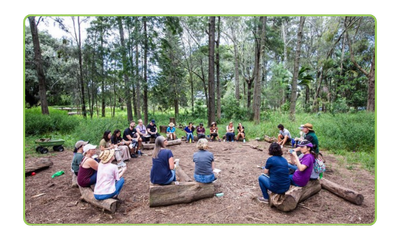
Urban green spaces are widely recognised for their role in supporting health and wellbeing, yet many cities continue to focus on infrastructure rather than how these spaces are actively used. This session responds to that gap by demonstrating a simple, low-resource approach to activating green spaces through facilitated nature connection practices. It introduces an entry-level model that can be delivered on-site and adapted to digital or hybrid formats.
Grounded in practitioner experience from Greater Sydney Parklands and supported by research across early childhood, adolescent and adult programs, this session explores why nature connection matters and how it can be created with minimal resources. Evidence from programs such as Guardians of the Park, Bush School and The Ian Potter Children’s WILD PLAY Garden shows that repeated, facilitated engagement with nature supports wellbeing, social connection and pro-environmental behaviour across the life course.
This hands-on workshop will be of interest to practitioners, policymakers and community organisations seeking practical and transferable approaches. Participants will leave with a clear understanding of how facilitation — rather than infrastructure — activates green spaces, and with adaptable tools that can be applied immediately in diverse urban contexts.
Site Visit (1C)
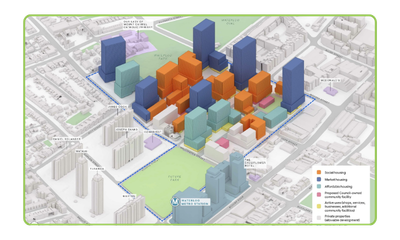
Guided walking tour of Waterloo public housing estate exploring the challenges of delivering a liveable high-density socially mixed community through redevelopment.
Date: Monday 31 August 2026
Time: 2:00pm – 4:00pm
Location: Waterloo, Counterpoint Community Services (The Factory)
Meeting Point: Waterloo Metro Station, main concourse exit corner of Raglan and Cope Streets. View map
Organiser: REDWatch, Tour lead: Geoff Turnbull, REDWatch spokesperson
Capacity: 30 pax
More Information
Background: Waterloo sits on Gadigal Country in inner Sydney and is home to one of the largest concentrations of public housing in Australia. The precinct is undergoing major change, including the opening of Waterloo Metro Station and the staged redevelopment of the Waterloo Estate into a 30% social 20% affordable and 50% private development. Tenant relocations and Stage 1 demolitions are underway alongside discussioins about what is necessary to deliver a socially mixed community.
Waterloo has been at the centre of changing visions of the role of government in housing, experiencing waves of intervention – from ‘slum clearance’ projects in the 1950s that compulsorily acquired private land to build new public housing, through the sell-off of public housing in the conservation area to fund the public housing system, to today’s Waterloo estate redevelopment that builds private housing on previously public land to pay for renewed social and affordable housing no longer run by government. These changes shape not only the built environment but also community identity, access to services, social connection, social impacts and health equity, making Waterloo an important case study for cities managing major urban transformation.
Key activities: Beginning at Waterloo Metro Station, Geoff will introduce participants to Waterloo’s history, the evolution of public housing and the current redevelopment. Walking through the estate, participants will visit key locations that illustrate changing housing policy, resident advocacy, heritage, neighbourhood identity and the impacts of redevelopment on everyday community life.
Participants will gain practical insights into how cities can balance large-scale urban renewal with community participation, collaborative governance and efforts to reduce health inequities.
Resources and links
Government Renewal site: https://www.nsw.gov.au/about-nsw/housing-and-infrastructure-projects/social-building-projects/waterloo-renewal-project
Accessibility
Site Visit (1D)
Randwick Health & Innovation Precinct (RHIP) – First Nations Place and Health Exhibition & the Precinct Arts Tour
Please note: Site Visits 1D and 1E are the same site visit offered at different times. Please select your preferred session when registering.
Date: Monday 31 August 2026
Time: 4:30pm – 5:20pm
Location: Health Translation Hub (HTH), Randwick Health & Innovation Precinct (RHIP)
Meeting Point: Meet at Sir John Clancy Auditorium lobby at 4:20pm to walk over OR join at Health Translation Hub (HTH) Ground Floor Lobby by 4:30pm. View map
Co-Organiser: UNSW Precincts, Randwick Health & Innovation Precinct (RHIP)
Capacity: 50 pax
More Information
About the Visit
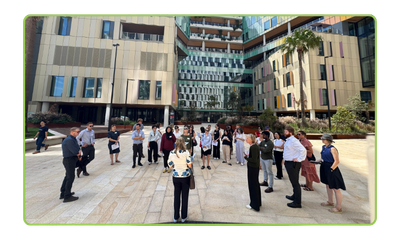
Delegates are invited to take part in a guided tour of the newly opened UNSW Health Translation Hub (HTH). The tour features a unique exhibition curated to reflect the conference themes and perspectives, offering meaningful insights and opportunities for reflection and discussion, alongside a look at the Randwick Health & Innovation Precinct (RHIP).
First Nations Place and Health Exhibition
The tour begins at the Health Translation Hub with a unique exhibition curated to reflect the conference themes and perspectives, exploring First Nations place and health. Delegates will have the chance to view the works and hear about the stories and ideas behind them.
The Precinct Arts Tour
The tour makes its way down through the Precinct to the Integrated Acute Services Building (IASB) to view the ancient Hearth Stones, the surrounding landscaping, and the Jonathan Jones artwork. From there, delegates will pass Rochelle Haley’s artwork linking to the Lunar Sway installation, before continuing through the Plaza to take in Nike Savvas’ Chroma Cosmic in the SCHN foyer and the Dennis Golding / Re-Right Collective artwork on High Street. Along the way, guests will hear from artists and Precinct partners about the works and the collaborations behind them, offering a unique window into the creativity and cultural life of the Precinct.
Site Visit (1E)
Randwick Health & Innovation Precinct (RHIP) – First Nations Place and Health Exhibition & the Precinct Arts Tour
Please note: Site Visits 1D and 1E are the same site visit offered at different times. Please select your preferred session when registering.
Date: Monday 31 August 2026
Time: 6:00pm – 6:50pm
Location: Health Translation Hub (HTH), Randwick Health & Innovation Precinct (RHIP)
Meeting Point: Meet at Sir John Clancy Auditorium lobby at 5:50pm to walk over OR join at Health Translation Hub (HTH) Ground Floor Lobby by 6:00pm. View map
Co-Organiser: UNSW Precincts, Randwick Health & Innovation Precinct (RHIP)
Capacity: 50 pax
More Information
About the Visit
Delegates are invited to take part in a guided tour of the newly opened UNSW Health Translation Hub (HTH). The tour features a unique exhibition curated to reflect the conference themes and perspectives, offering meaningful insights and opportunities for reflection and discussion, alongside a look at the Randwick Health & Innovation Precinct (RHIP).
First Nations Place and Health Exhibition
The tour begins at the Health Translation Hub with a unique exhibition curated to reflect the conference themes and perspectives, exploring First Nations place and health. Delegates will have the chance to view the works and hear about the stories and ideas behind them.
The Precinct Arts Tour
The tour makes its way down through the Precinct to the Integrated Acute Services Building (IASB) to view the ancient Hearth Stones, the surrounding landscaping, and the Jonathan Jones artwork. From there, delegates will pass Rochelle Haley’s artwork linking to the Lunar Sway installation, before continuing through the Plaza to take in Nike Savvas’ Chroma Cosmic in the SCHN foyer and the Dennis Golding / Re-Right Collective artwork on High Street. Along the way, guests will hear from artists and Precinct partners about the works and the collaborations behind them, offering a unique window into the creativity and cultural life of the Precinct.
Site Visit (2A)
A Visit to Western Sydney – Blacktown and the Western Sydney Parklands
Date: Friday 4 September 2026
Time: 10:00am – 3:30pm
Location: Fairwater Estate (Blacktown) & Bungarribee Park (Western Sydney Parklands)
Meeting Point: Blacktown Train Station. View map
Co-Organiser: Blacktown City Council & Greater Sydney Parklands
Capacity: 50 pax
More Information
About the Site Visit:
Journey to Western Sydney for a day exploring how communities on the city’s fast-growing region are balancing rapid urban development with accessible, health-supportive green space.
Morning
The morning begins in Blacktown with a visit to the Fairwater Estate, offering first-hand insight into contemporary residential growth in one of Sydney’s most diverse and fastest-changing local government areas. Participants will see how new housing, infrastructure and community amenity are being shaped, and consider the challenges and opportunities of delivering liveable, healthy neighbourhoods at scale.
As New South Wales’s first 6 Star Green Star certified community, Fairwater demonstrates how sustainability can be embedded into neighbourhood design through walkable streets, a renewable thermal energy system, water-saving initiatives and an extensive network of open space. A defining feature of the estate is its integrated blue-green infrastructure, where two major parklands are centred on water bodies connected by a naturalised tributary of Breakfast Creek. The restoration of the waterway from a former concrete channel has created habitat, improved water quality, attenuated stormwater flows and enabled water reuse, while also contributing to urban cooling and thermal comfort. Together, these features provide valuable insights into how sustainable neighbourhood design can support environmental resilience, community wellbeing, and long-term liveability.
Lunch
At midday, the group will gather for an authentic Aussie BBQ lunch in Western Sydney Parklands, a relaxed opportunity to share ideas, network and enjoy the outdoors the way locals do.
Afternoon
The afternoon continues at Bungarribee Park in Western Sydney Parklands. Covering more than 27 square kilometres, the Western Sydney Parklands is one of the largest urban parklands in the world. Bungarribee Park, the largest recreational space within the parklands, is a flagship destination supporting the health and wellbeing of Western Sydney’s – rapidly growing communities. The precinct is also home to Sydney Zoo, providing and opportunity to explore the role that partnerships between parks, education and conservation organisations can play in creating healthy communities.
Guided by Greater Sydney Parklands, participants will explore how the park supports recreation, biodiversity, social connection and everyday physical activity. Highlights include the extensive network of shared walking and cycling trails through restored bushland and open parkland; the award-winning nature-based adventure playground with its climbing tower, flying foxes and water and sand play areas; expansive picnic and BBQ shelters; and dedicated off-leash dog areas.
Participants will also take part in a hands-on habitat restoration experience through the award-winning Guardians of the Park program. They will hear how the program uses environmental restoration and nature connection to support young people’s wellbeing, confidence and sense of belonging, before planting native species and contributing to the creation of future habitat.
Along the way, the group will consider how the parklands are planned, activated and maintained to serve one of Australia’s most diverse and fastest-growing regions.